
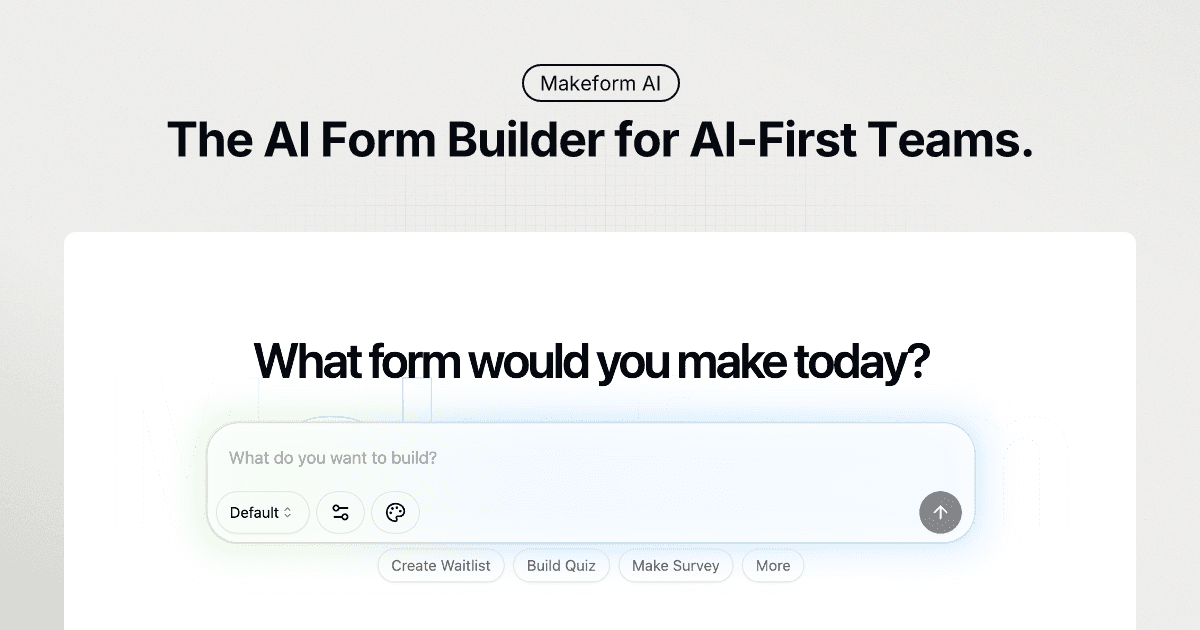
How Makeform and JobRight Achieved ChatGPT Visibility Through High-Authority Content
Real case study: How our clients Makeform.ai and JobRight.ai achieved consistent visibility in ChatGPT conversations by building high-authority content with domain ratings of 49-50. Learn the proven strategies behind their success.

Something remarkable is happening with our GEO clients. When people ask ChatGPT for recommendations in their industries, they're getting mentioned consistently—not through luck, but through strategic optimization.
Makeform.ai and JobRight.ai are now appearing in ChatGPT conversations when users ask for form builders and job search platforms. Both have achieved domain ratings around 49-50 and built the kind of authoritative content that AI systems naturally want to cite.
Let's look at the real conversations where they're showing up:
This isn't happening by accident. It's the result of systematic Generative Engine Optimization and a deep commitment to building genuinely authoritative content.
Another one of our clients, Edensign, is following the same playbook—building the foundation of high-authority content that AI systems recognize and trust.
Many people wonder whether traditional SEO metrics like domain authority (DA) matter when optimizing for AI systems. The answer, unequivocally, is yes—perhaps even more than before.
Domain Authority as Trust Signal
AI systems like ChatGPT don't just look at content in isolation. They evaluate the credibility of sources before deciding what to cite. Domain authority serves as a powerful proxy for:
Both Makeform and JobRight invested in building their domain authority through legitimate means—quality content, genuine partnerships, and valuable resources. You can analyze domain authority metrics using tools like Ahrefs, which provides comprehensive domain rating insights.
The Authority Threshold
Our data suggests there's a threshold effect around DA 40-50. Once you cross this range, AI systems begin treating your content as potentially citable. Below it, you're competing against hundreds of similar sources. Above it, you're in a select group of authoritative voices.
This aligns with what we've discussed in our guide on gaining visibility in generative AI answers—authority signals create compound advantages.
Getting to DA 49-50 isn't about quick wins or shortcuts. It requires a systematic approach to content creation and distribution.
1. Comprehensive Resource Creation
Both Makeform and JobRight created definitive resources in their categories:
2. Strategic Link Building
Domain authority comes from authoritative backlinks. Our clients achieved this through:
3. Consistent Publishing Cadence
Authority builds over time. Both clients maintained regular publishing schedules:
This approach mirrors what we've outlined in our AI search optimization guide—consistency compounds into authority.
One of the most underrated factors in achieving ChatGPT visibility is strong social media presence, particularly on Reddit.
Why Reddit Matters for AI Citations
AI systems like ChatGPT don't just scan official websites—they analyze conversations, discussions, and user-generated content across the internet. Reddit serves as a critical signal of genuine brand relevance and user sentiment.
Both Makeform and JobRight have benefited significantly from Reddit presence:
When ChatGPT sees a brand mentioned positively across multiple Reddit communities, with users genuinely recommending it in response to others' questions, this creates powerful authority signals.
Social Proof as AI Training Data
Consider how AI systems learn about brands:
The third and fourth categories are where many brands fall short. Even with excellent domain authority and content, without authentic social presence, AI systems may not have enough context to cite your brand confidently.
Strategic Reddit Engagement
Makeform and JobRight didn't spam Reddit with self-promotion. Instead, they:
This authentic engagement created a natural pattern of mentions and recommendations that AI systems recognize as genuine authority.
The Compound Effect of Social Signals
When AI systems analyze your brand, they look for patterns across multiple sources:
Strong Reddit presence answers all these questions positively. Users discussing "best form builders" on Reddit might mention Makeform because they've seen it recommended before, used it themselves, or read positive experiences from others.
Beyond Reddit: Multi-Platform Social Presence
While Reddit is particularly valuable for B2B SaaS and tech products, other platforms matter too:
Makeform and JobRight maintained presence across multiple platforms, creating a comprehensive social footprint that AI systems can analyze when deciding whether to cite them.
Measuring Social Signal Impact
Track these metrics to understand your social presence effectiveness:
As we explored in our Reddit marketing case studies, strategic social engagement creates measurable business impact—including improved AI visibility.
The Authenticity Requirement
Here's the critical point: AI systems can detect inauthenticity. Fake reviews, manipulated discussions, and astroturfing campaigns don't just fail—they can actively harm your credibility.
Both Makeform and JobRight succeeded because their Reddit presence reflected genuine user satisfaction:
This authenticity is what makes social signals valuable to AI systems. They're looking for genuine indicators of trust, not manufactured social proof.
Getting Started with Social Presence
If your brand lacks social signals:
Building social presence takes time—typically 6-12 months to establish meaningful traction. But like domain authority, it compounds. Each authentic mention makes future mentions more likely, creating a flywheel effect.
The combination of high domain authority (DA 49-50) plus strong social signals (especially Reddit) is what made Makeform and JobRight so consistently citable by ChatGPT. Neither factor alone would have been sufficient—the combination creates the authority threshold AI systems require.
Understanding the mechanisms behind AI mentions helps clarify why domain authority matters so much.
The Retrieval-Generation Process
When ChatGPT responds to a query like "What are the best form builders?", it goes through several stages:
Domain authority influences stage 3 significantly. Higher-DA sources get weighted more heavily during the evaluation phase.
Context Matters
Not all mentions are equal. ChatGPT is more likely to mention sources when:
This is why we emphasize ChatGPT search optimization strategies that go beyond basic SEO.
The Citation Network Effect
Once you start appearing in ChatGPT responses, a virtuous cycle begins:
This is exactly what's happening with Makeform and JobRight—each mention creates conditions for future mentions.
Let's examine the specific ways Makeform appears in ChatGPT conversations about form builders.
Direct Recommendations
In this conversation, ChatGPT recommends Makeform alongside established players like Typeform and Google Forms. The key factors that enabled this:
Contextual Mentions
Makeform doesn't just appear in generic "best form builders" queries. It shows up in specific contexts:
This contextual relevance comes from strategic content that addresses specific use cases and user needs.
The Authority Foundation
With a domain rating of ~50, Makeform has built credibility through:
This foundation is what makes AI mentions possible.
JobRight's appearance in ChatGPT job search recommendations demonstrates a different but equally effective approach.
Category Definition
In this conversation, JobRight appears in discussions about AI-powered job search tools. The positioning is specific:
Building Domain Authority in Competitive Spaces
The job search category is extremely competitive, with established players like LinkedIn, Indeed, and Glassdoor. JobRight achieved DA ~49 by:
The Content Moat
JobRight's content strategy created a defensible position:
This volume and quality of content signaled to AI systems that JobRight is an authoritative source in the job search space.
The success of Makeform and JobRight contains lessons for businesses across all industries.
AI-Mediated Discovery is Growing
According to Gartner research, traditional search engine volume will drop 25% by 2026 due to AI chatbots and virtual agents. This isn't speculation—it's already happening.
People are increasingly:
If your brand isn't appearing in these conversations, you're missing a growing channel for customer acquisition.
Authority Takes Time to Build
Both Makeform and JobRight spent months building their authority:
There's no shortcut to DA 49-50. But once you get there, the advantages compound.
The Earlier You Start, The Better
We're still in the early innings of Answer Engine Optimization. The businesses that build authority now will have massive advantages as AI-mediated discovery becomes the norm.
Think of this as the 2002-2005 period for SEO—when early movers built positions that became extremely valuable as search traffic grew.
It's Not Just for Tech Companies
While Makeform and JobRight are tech products, the same principles apply across industries:
Our other client, Edensign, is applying these same strategies in their category—proving that this approach works across different business models.
Based on what worked for Makeform, JobRight, and our other clients, here's a practical framework.
Phase 1: Audit Your Current Authority (Months 1-2)
Before you can improve authority, understand where you stand:
Phase 2: Create Cornerstone Content (Months 2-4)
Build the foundation of authoritative resources:
Phase 3: Earn Strategic Backlinks (Months 3-6)
Focus on quality over quantity:
Phase 4: Maintain Momentum (Ongoing)
Authority requires consistent reinforcement:
This is the same approach outlined in our GEO for beginners guide—systematic, strategic, and focused on long-term authority.
In working with dozens of clients, we've seen patterns of what doesn't work.
Mistake 1: Prioritizing Quantity Over Quality
Publishing 50 mediocre blog posts won't build authority. Publishing 10 exceptional guides will. Focus on depth and usefulness, not volume for its own sake.
Mistake 2: Buying Links or Using PBNs
Artificial link building might temporarily boost DA metrics, but:
Legitimate authority comes from earning citations through valuable content.
Mistake 3: Ignoring Technical Foundations
High-quality content needs technical SEO support:
As discussed in our technical SEO comparison, the technical foundation matters.
Mistake 4: Not Tracking AI Visibility
You can't improve what you don't measure. Regularly test:
Use our monitoring guide to set up proper tracking.
Mistake 5: Expecting Instant Results
Building to DA 49-50 takes time:
This is a marathon, not a sprint.
What Makeform and JobRight are experiencing now will become standard for all businesses.
AI Search is Replacing Traditional Search
The shift is already underway:
Within 3-5 years, most information discovery will be AI-mediated.
Authority Will Be Table Stakes
In traditional search, you could rank for keywords through technical optimization alone. In AI-mediated discovery, authority becomes essential.
AI systems won't cite sources they don't trust. Building authority isn't optional—it's the prerequisite for visibility.
Early Movers Have Advantages
Like SEO in the early 2000s, businesses that build authority now will have compound advantages:
As we discussed in why optimization will persist, these structural advantages compound over time.
The Opportunity is Now
Makeform, JobRight, and Edensign are showing what's possible. But the window for being an early mover is limited.
In 2-3 years, AI citations will be a crowded space. Now, it's still possible to build category leadership through systematic effort.
If you're ready to follow the Makeform and JobRight playbook, here's how to begin.
Step 1: Assess Your Starting Point
Step 2: Define Your Authority Topics
Step 3: Create Your Content Roadmap
Step 4: Execute Systematically
Step 5: Iterate and Improve
This is the same methodology we use with all our clients—systematic, strategic, and focused on building real authority.
For businesses ready to invest in GEO seriously, our team at Enception.AI offers comprehensive strategy development, content planning, and implementation support. Contact us to discuss your specific needs.
The success stories of Makeform and JobRight demonstrate a fundamental shift in how brands should think about digital visibility.
The Old Model: Optimize for algorithms, focus on keywords, pursue backlinks for DA.
The New Model: Build genuine authority, create definitive resources, earn AI citations through trust.
The tactics have evolved, but the principle remains the same: make your content so valuable and trustworthy that systems want to surface it.
Domain ratings of 49-50 aren't arbitrary milestones—they represent crossing a threshold where AI systems begin treating you as a credible source worth citing.
High-authority content isn't optional anymore—it's the foundation for visibility in an AI-mediated world.
Early movers like Makeform, JobRight, and Edensign are proving the model works—and creating blueprints that other businesses can follow.
The question isn't whether AI-mediated discovery will become dominant. It's whether you'll build the authority needed to show up in those conversations.
As we explored in our analysis of why ChatGPT optimization persists, these patterns are structural—not temporary trends.
Start building your authority today. In 12-18 months, you'll be glad you did.
For more insights on GEO strategies and AI optimization, explore our complete GEO guide or dive into AI search optimization techniques.
The future of digital visibility is being shaped right now. Will your brand be part of it?
- Makeform.ai and JobRight.ai are consistently appearing in ChatGPT conversations with domain ratings of 49-50, proving that high-authority content drives AI visibility.
- Domain authority serves as a critical trust signal for AI systems—crossing the DA 40-50 threshold dramatically increases citation probability.
- Reddit and social media presence provide essential social signals—authentic discussions and user recommendations create powerful authority indicators for AI systems.
- High-authority content requires comprehensive resources (3,000-5,000 words), original research, practical examples, and consistent publishing over 12-18 months.
- AI systems evaluate sources through retrieval-generation processes where higher-DA sources get weighted more heavily during credibility evaluation.
- Strategic link building through guest contributions, partnerships, press coverage, and community engagement builds sustainable domain authority.
- The combination of high domain authority (DA 49-50) plus strong social signals (especially Reddit) creates the authority threshold AI systems require for citations.
- Early movers in GEO (like Makeform, JobRight, and Edensign) gain compound advantages as AI-mediated discovery grows—similar to early SEO adopters.
- By 2026, search engine volume will drop 25% due to AI chatbots—businesses must build both domain authority and social presence now or miss this channel.
Ultimate Guide to Generative SEO
Comprehensive guide covering everything from basic concepts to advanced strategies for optimizing content in the age of generative AI.
Read Full GEO GuideGain Visibility in Generative AI Answers
Proven methods to increase content visibility in AI responses across ChatGPT, Claude, and Perplexity. Boost your AI search presence.
Learn Visibility TacticsChatGPT Search Optimization Strategies
Expert strategies and proven techniques for optimizing content to be discovered and cited by ChatGPT, based on real testing results.
Explore Optimization StrategiesMonitor GEO & AEO Conversions Effectively
Complete guide to tracking Generative Engine Optimization and Answer Engine Optimization campaigns with actionable metrics and tools.
Learn to Track ResultsLearn how Enception.AI can help you build the high-authority content strategy that gets your brand mentioned in ChatGPT and other AI systems. Follow the proven playbook from Makeform and JobRight.
Get Started